7 Proven Streams of Passive Income for Designers in 2026
By Steven Van ·
Discover 7 powerful streams of passive income for designers. Learn to sell templates, fonts, and stock assets to build a sustainable creative business.
Trading time for money is the classic designer's dilemma. While client work pays the bills, it often leads to burnout and a fixed income ceiling. The alternative is to build systems that generate revenue independently of your direct involvement, allowing you to earn while you sleep, travel, or focus on new creative projects. This is the core principle behind generating passive income for designers: shifting from selling hours to selling scalable assets.
This guide provides a direct, actionable blueprint for doing just that. We move beyond the abstract concepts to give you a concrete roadmap for turning your existing design skills into automated, recurring revenue streams. To successfully transition your career, it's beneficial to explore various proven ways to generate passive income online that align with your skills and goals. Here, we will focus specifically on platforms built for creators like you.
Inside this comprehensive listicle, you will find a detailed breakdown of seven of the best platforms where you can sell your work and build a sustainable income. For each option, we'll cover:
- How It Works: A clear explanation of the business model.
- What to Sell: The most profitable asset types for each platform.
- Monetization Tips: Actionable strategies to maximize your earnings.
- Effort vs. Reward: A realistic look at the upfront work and potential payoff.
We've included direct links, screenshots, and practical examples to help you decide which path is right for your unique style and goals. Forget vague advice; this is your step-by-step manual for creating a more profitable and flexible design career. Let's start building your financial future beyond the billable hour.
1. Creative Market
Creative Market is a premier marketplace for designers looking to generate passive income by selling high-quality, ready-to-use digital assets. Unlike broader platforms, it's a curated, design-first ecosystem. This focus attracts a specific audience of creatives and businesses who understand the value of good design and are willing to pay for it, saving you the effort of building an audience from scratch.
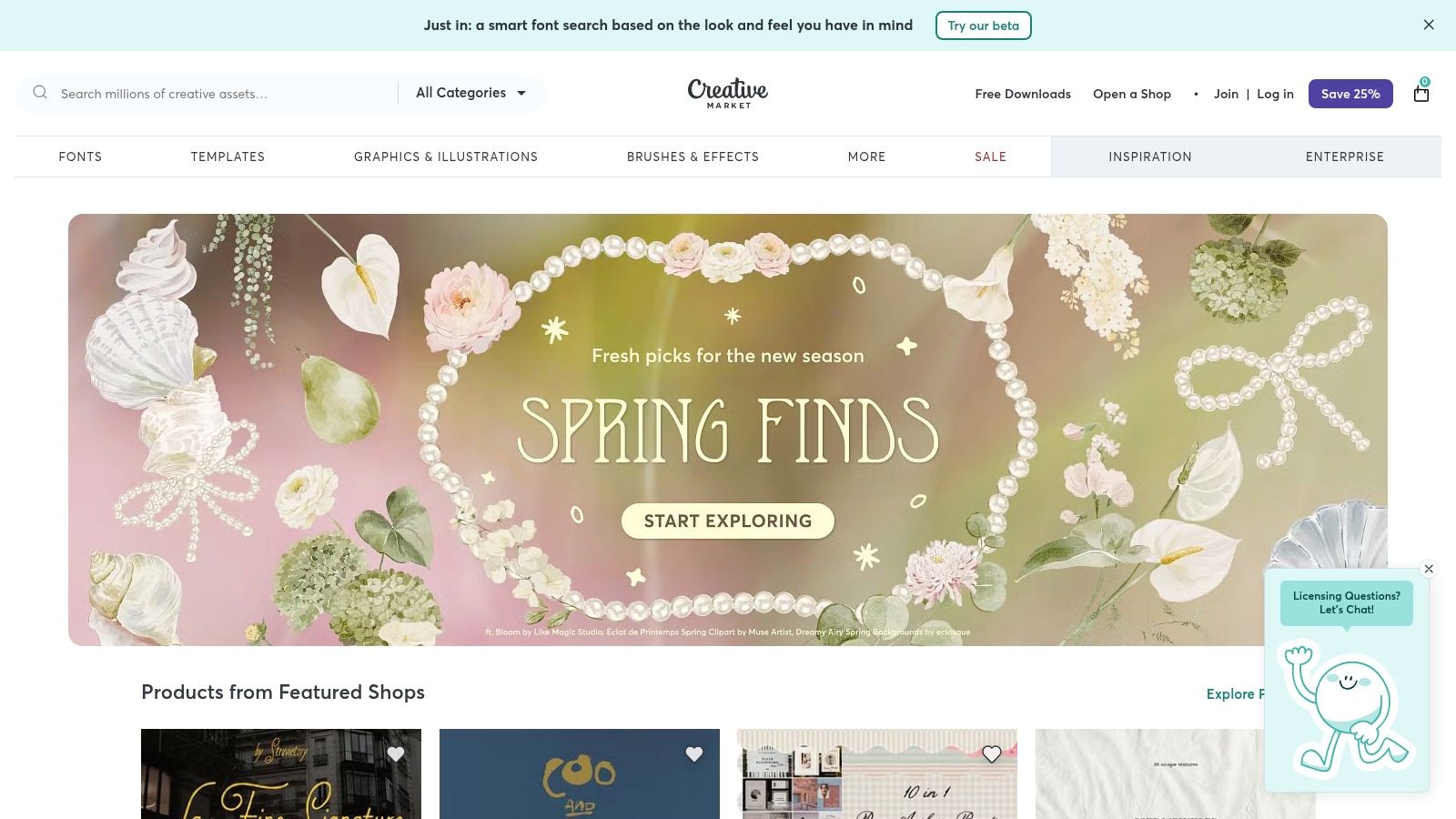
The platform is best known for its wide range of assets, including fonts, website themes, presentation templates, illustration packs, and UI kits. For designers, this means you can sell the very assets you might create as byproducts of your client work, turning your existing skills into a repeatable revenue stream.
How It Works for Sellers
Getting started requires submitting a shop application. Creative Market reviews each applicant to maintain a high standard of quality, which ultimately benefits approved sellers by reducing competition from low-effort spam. Once approved, you have complete control over your product catalog and pricing.
Sellers typically earn a 50% commission on the list price of their items. While this is a higher platform fee than some direct-sale options, it covers payment processing, marketing to a built-in audience, and platform maintenance. Creative Market also provides valuable shop-side analytics, allowing you to track views, sales, and conversion rates to refine your product strategy.
Key Insight: The true value of Creative Market lies in its targeted traffic. Buyers arrive with clear intent, searching for specific design assets, which translates to higher conversion potential for quality products.
Maximizing Your Earnings
To succeed on Creative Market, focus on creating unique, in-demand products. Before you build, research popular categories to identify gaps or opportunities for a fresh perspective. High-quality product mockups and detailed descriptions are essential for making your listings stand out.
You can also boost your income through the platform's partner program. By promoting other assets or the platform itself on your blog or social media, you can earn a commission on referred sales. Additionally, understanding the nuances of asset licensing is critical. To protect yourself and provide clarity for your buyers, it's a good idea to learn more about the differences between free and commercial use rights for digital assets.
Website: https://creativemarket.com
Summary:
| Feature | Details |
|---|---|
| Monetization | Sell digital assets (fonts, templates, graphics, etc.) |
| Commission | 50% of the list price to the seller. |
| Access | Requires a successful shop application. |
| Best For | Designers with high-quality assets who want access to a ready-made audience. |
2. Envato (Market + Envato Elements / Placeit)
The Envato ecosystem is a massive, multi-faceted platform offering several distinct routes to passive income for designers. It’s not just a single marketplace but a collection of services including Envato Market for individual asset sales, Envato Elements for subscription-based downloads, and Placeit for template-based mockups. This diversity allows you to monetize your work through different models, reaching an enormous global audience with varied needs.
Unlike single-focus marketplaces, Envato covers nearly every digital asset category imaginable. ThemeForest for website templates, VideoHive for motion graphics, and GraphicRiver for print and graphic assets are just a few of its specialized sites. This segmentation helps buyers find exactly what they need, and it lets you specialize in the niche where your skills are strongest.
How It Works for Sellers
Your journey typically starts on Envato Market, where you sell items individually. You set your own price, and Envato adds a buyer fee on top. The commission you pay, called the author fee, depends on your exclusivity and lifetime sales. Non-exclusive authors, who can sell their assets elsewhere, pay a flat 55% fee. Exclusive authors enjoy a much lower fee, which starts at 37.5% and decreases to just 12.5% as their total sales grow.
Top-performing authors may be invited to list their assets on Envato Elements, the subscription service. Here, earnings are not based on individual sales but on a "subscriber share" model. 50% of net revenue is pooled and distributed to authors based on how much their items were downloaded. A similar model exists for Placeit, which pays contributors a 20% share of net revenue from single purchases or subscription usage.
Key Insight: Envato's true power is its diversified income potential. Success on Market can lead to an invitation to Elements, creating a recurring revenue stream that complements your one-off sales and builds a more stable passive income foundation.
Maximizing Your Earnings
The key to success on Envato is volume and quality within a specific niche. Identify a popular category like WordPress themes, Shopify templates, or After Effects presets and build a portfolio of high-quality, well-documented assets. Because the audience is so large, even a small share of a major category can generate significant income.
To boost your visibility, focus on creating excellent item previews and detailed documentation. Many top authors also provide outstanding customer support, which leads to better reviews and higher rankings. Additionally, staying current with design trends and software updates is crucial for keeping your assets relevant. You can also incorporate new techniques by learning more about the best AI tools for designers to master, which can speed up your workflow and offer new creative possibilities.
Website: https://market.envato.com
Summary:
| Feature | Details |
|---|---|
| Monetization | Sell individual assets (Market) or earn from a subscription pool (Elements, Placeit). |
| Commission | Market: 12.5% to 55% author fee. Elements/Placeit: Subscriber-share revenue pool. |
| Access | Open application for Envato Market; Envato Elements is by invitation only. |
| Best For | Designers looking to serve a massive, diverse audience with multiple earning models. |
3. Gumroad
Gumroad offers designers a direct, no-code storefront to sell digital products straight to their audience. It stands out by simplifying the entire process, from creating a product page to delivering files and handling global sales tax. This makes it an ideal choice for creators who already have an audience and want a fast, low-overhead way to start generating passive income for designers.
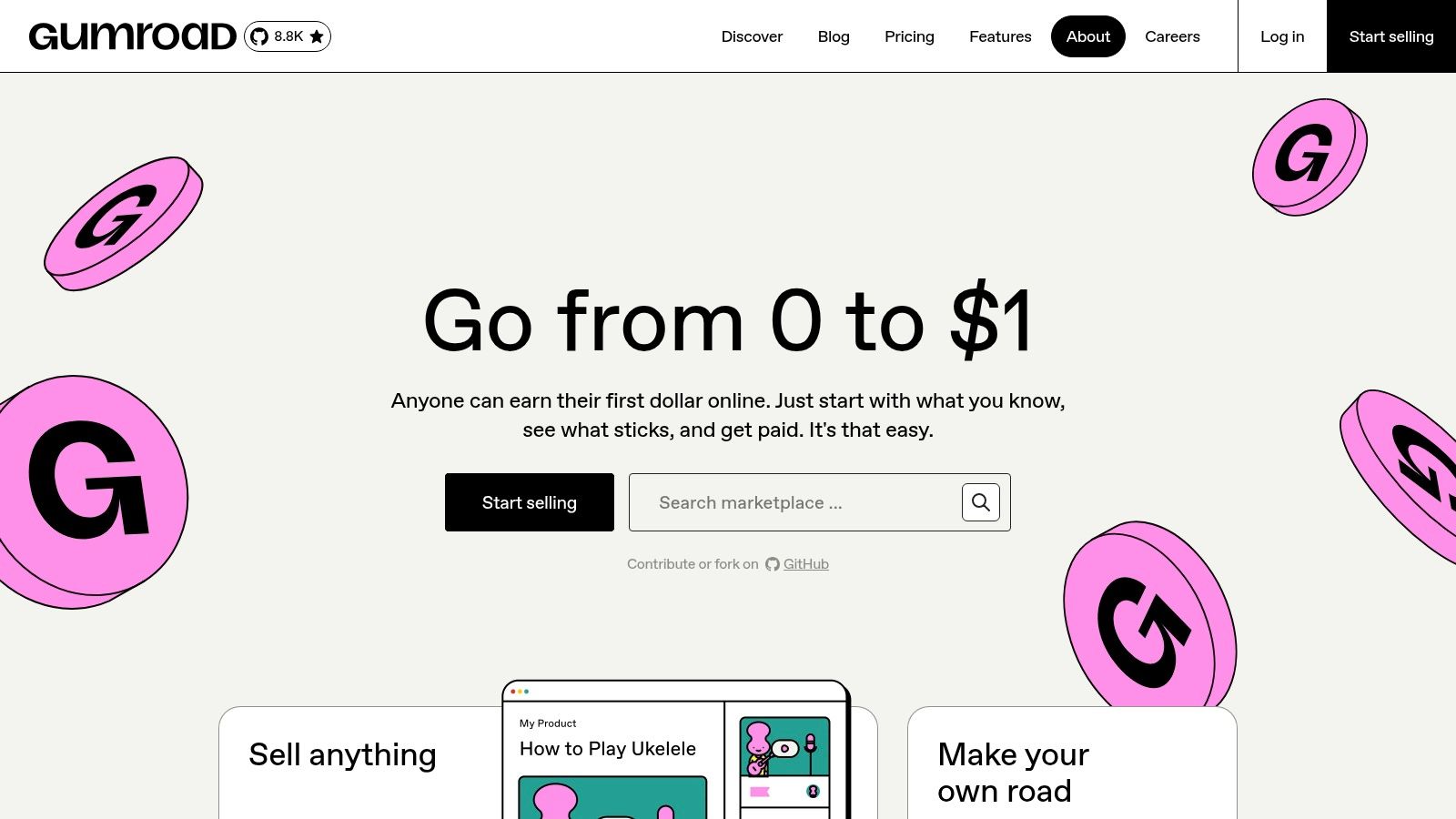
Unlike curated marketplaces, Gumroad is an open platform where you are in full control of your brand, pricing, and customer relationships. You can sell a wide variety of digital goods, including UI kits, icon packs, ebooks, video courses, and even software licenses. Its flexibility supports one-time purchases, subscriptions for recurring revenue, and tiered pricing models.
How It Works for Sellers
Setting up a shop on Gumroad is incredibly fast. You can create a product page and start selling in minutes without any upfront costs or monthly fees. The platform acts as the Merchant-of-Record, which means it automatically handles the complexities of collecting and remitting VAT and other sales taxes worldwide, a major administrative relief for solo designers.
Fees are transparent: Gumroad takes a 10% flat fee per transaction. This fee covers payment processing and file hosting. If a sale originates from Gumroad's "Discover" feature, which promotes products to the wider Gumroad audience, the fee increases to 30%. This structure rewards creators who drive their own traffic while still offering a pathway for organic discovery.
Key Insight: Gumroad's biggest advantage is its role as a Merchant-of-Record. By managing global sales tax, it removes a significant legal and administrative burden, allowing designers to focus entirely on creating and marketing their products.
Maximizing Your Earnings
Success on Gumroad is directly tied to your ability to build and engage an audience. Since you are responsible for marketing, use your social media, email list, or blog to drive traffic directly to your product pages. Offer pre-orders to build hype and generate early revenue, or use discount codes to run special promotions.
To further boost your income, explore recurring revenue models. You can offer a membership that gives subscribers access to a library of design assets or a monthly resource pack. Gumroad's simple setup for subscriptions and installments makes this a straightforward strategy to implement. Always verify the platform’s current payout policies, as terms can sometimes change.
Website: https://gumroad.com
Summary:
| Feature | Details |
|---|---|
| Monetization | Sell digital products, courses, and memberships directly to an audience. |
| Commission | 10% fee on direct sales. 30% fee on sales from Gumroad Discover. |
| Access | Open to everyone; no application required. |
| Best For | Designers with an existing audience who want full control and minimal administrative work. |
4. Etsy
While often associated with handmade crafts, Etsy has become a massive marketplace for designers seeking passive income through digital goods. The platform attracts an enormous consumer audience actively searching for printables, planners, social media templates, and SVG cut files. This built-in demand makes it an excellent entry point for designers creating assets for personal use rather than for other businesses.
Etsy's greatest strength for digital sellers is its automated fulfillment. Once you create a product and list it, the platform handles the transaction and delivers the downloadable file to the customer instantly. This creates a truly passive income stream after the initial setup work, allowing you to focus on creating new products or marketing your shop.
How It Works for Sellers
Setting up a shop is straightforward and doesn't require a formal application process. You can start listing products immediately. The key is understanding Etsy's fee structure, which is more layered than some other marketplaces. Each listing costs a flat $0.20 for a four-month period. When an item sells, Etsy takes a 6.5% transaction fee on the total sale price (including shipping and gift wrap, though not applicable for digital goods).
Additionally, there's a payment processing fee, which in the US is typically 3% + $0.25 per transaction. Sellers should also be aware of the Offsite Ads program. If a buyer clicks an ad for your product on a site like Google or Facebook and makes a purchase within 30 days, Etsy charges an additional 12% to 15% fee on that sale. While this can increase your reach, it significantly impacts margins.
Key Insight: Success on Etsy hinges on mastering its search algorithm. Treat your listings like a search engine optimization (SEO) puzzle, using relevant keywords in your titles, tags, and descriptions to connect with buyers who are ready to purchase.
Maximizing Your Earnings
To stand out in a competitive marketplace, focus on niche categories. Instead of "wedding invitation," target a more specific term like "boho terracotta wedding invitation template." High-quality, appealing thumbnail images are your most important sales tool, so invest time in creating mockups that show your designs in their best light.
Test different product bundles, pricing strategies, and keyword combinations to see what resonates with shoppers. Offering excellent customer service, even for digital products, can lead to positive reviews, which boosts your shop's visibility. Ultimately, treating your Etsy shop like a real business-with a focus on marketing, analytics, and customer experience-is the surest path to generating significant passive income for designers.
Website: https://www.etsy.com
Summary:
| Feature | Details |
|---|---|
| Monetization | Sell digital downloads (planners, templates, printables, SVGs). |
| Commission | 6.5% transaction fee + payment processing + $0.20 listing fee + potential Offsite Ad fees (12-15%). |
| Access | Open to all sellers; no application required to start. |
| Best For | Designers creating consumer-focused goods who want access to a huge, active buyer market. |
5. Canva Creators
The Canva Creators program offers a distinct path to passive income for designers by letting them contribute directly to Canva’s massive, ever-growing content library. Instead of selling assets one by one, you earn royalties when your templates or elements are used by the platform's millions of Pro subscribers. This model turns your design skills into a scalable income source tied to one of the world's most popular design tools.
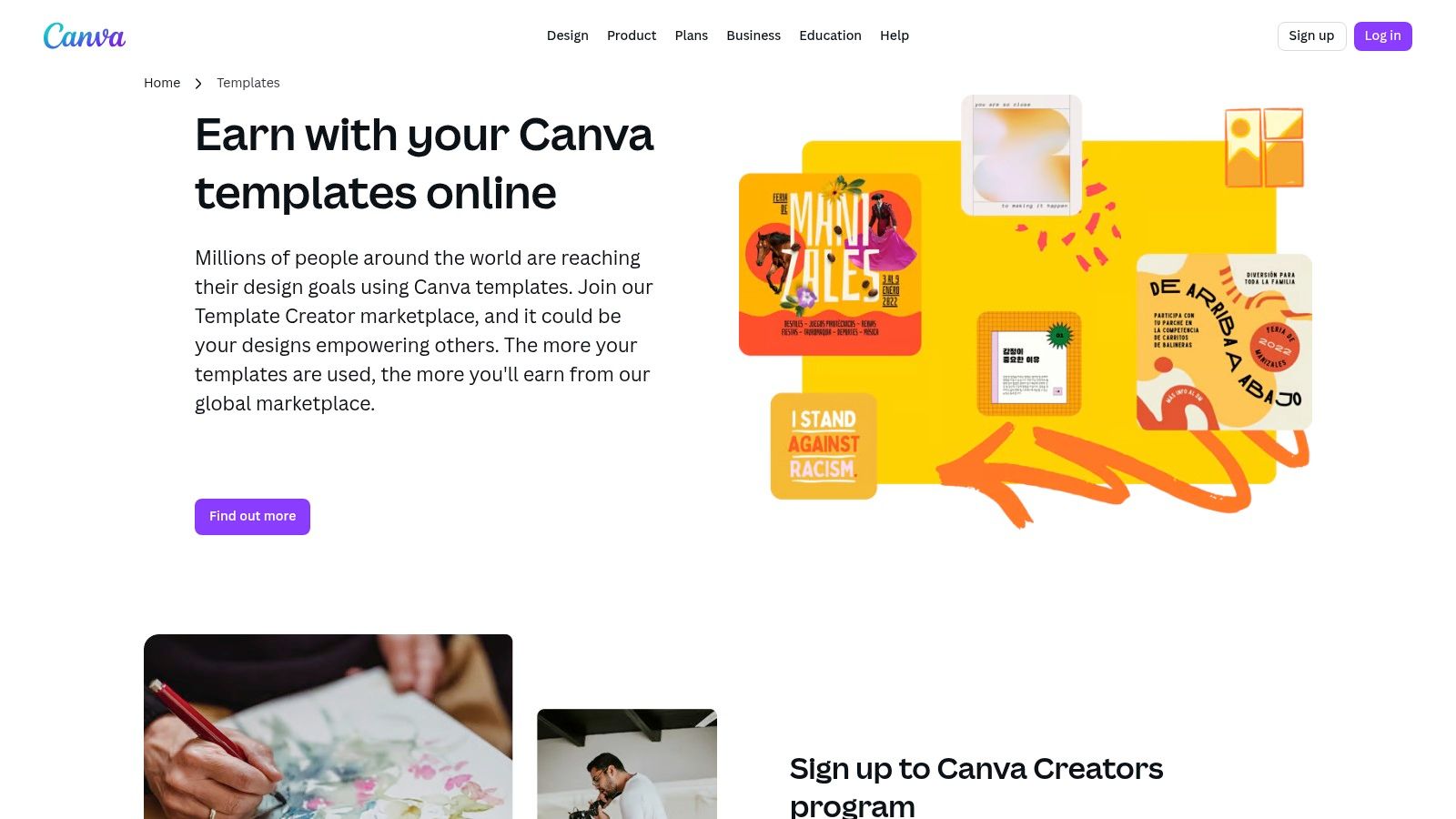
Unlike traditional marketplaces where you must build your own brand and audience, Canva provides immediate distribution. Your creations become part of the native user experience, discoverable by people actively looking for solutions. This is ideal for designers who excel at creating practical, user-friendly templates for social media, presentations, documents, and videos.
How It Works for Sellers
To join, you must apply to become a Canva Creator. The program is selective, with Canva reviewing portfolios to ensure contributors meet its quality and style guidelines. Once accepted, you can upload templates (for presentations, social posts, etc.) or elements (like illustrations, icons, and photos).
Earnings are based on a royalty pool model. Each time a Canva Pro user exports a design containing one of your premium templates, you earn a royalty. The specific amount per use varies monthly based on the size of the total royalty pool and the total number of template exports across the platform. Canva handles all customer service and distribution, allowing you to focus purely on creation. Payouts are made monthly once your earnings reach a low threshold ($10 for most payment methods).
Key Insight: Success on Canva isn't about creating complex, niche designs. It's about understanding the mainstream user and producing high-quality, easy-to-customize templates that solve common, everyday design problems.
Maximizing Your Earnings
To stand out in a vast library, focus on creating templates for in-demand use cases with broad appeal. Research trending topics and styles directly within Canva to see what's popular. Creating a series of cohesive templates around a single theme (e.g., a "Minimalist Business" pack with social posts, a presentation, and letterhead) can encourage repeat usage from the same users.
Pay close attention to Canva's design guidelines and technical requirements to ensure your submissions are approved quickly. Use relevant, accurate keywords when uploading your templates to improve their discoverability in search. Since your income is tied to usage, creating timeless, evergreen designs that remain relevant for years is a powerful strategy for long-term passive income for designers.
Website: https://www.canva.com/creators/templates/
Summary:
| Feature | Details |
|---|---|
| Monetization | Earn royalties from a pool based on Pro user template usage. |
| Commission | Varies based on the monthly royalty pool and usage volume. |
| Access | Requires a successful application to the Canva Creators program. |
| Best For | Template designers focused on high-volume, mainstream use cases (social media, presentations). |
6. Adobe Stock
Adobe Stock is a massive, trusted marketplace where designers can sell stock photos, vector illustrations, videos, and even design templates. Its most significant advantage is its direct integration with the Adobe Creative Cloud suite. This means millions of potential buyers can search, license, and use your assets directly within apps like Photoshop, Illustrator, and InDesign, creating a seamless path from discovery to purchase.
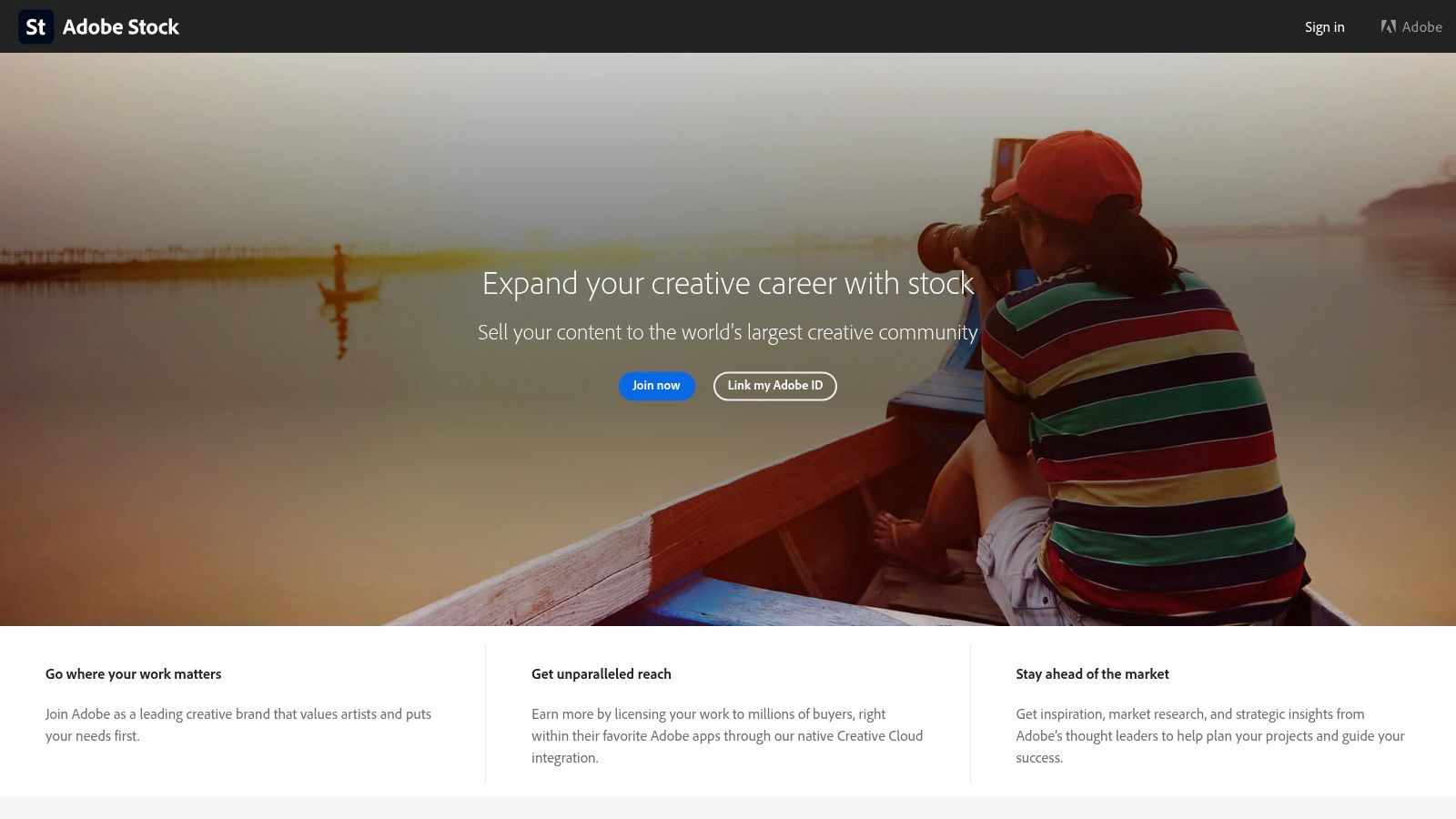
This platform provides a straightforward way for designers to generate passive income from the assets they already create. Whether it's a series of icons that didn't make it into a final client project or a collection of high-quality photos, Adobe Stock turns those unused files into a potential revenue source. The audience is broad, ranging from large corporations to individual creatives, all looking for quality content.
How It Works for Sellers
Becoming a contributor is free and relatively simple. You upload your assets, add relevant titles, descriptions, and keywords, and submit them for review. Adobe's team checks for technical quality and compliance before making them available on the marketplace. A key benefit is that contributions are non-exclusive, meaning you can sell the same assets on other stock platforms to diversify your income streams.
Sellers receive a flat 33% royalty for most photos, vectors, and illustrations, and 35% for video content. While these rates are fixed, the platform's sheer volume of users can lead to consistent sales over time. Payouts are made through PayPal or Skrill once your account reaches a minimum balance of $25.
Key Insight: The native Creative Cloud integration is a powerful sales driver. When a designer can instantly license your vector directly in an Illustrator project, the friction to buy is almost zero, increasing the likelihood of a sale.
Maximizing Your Earnings
Success on Adobe Stock is a game of volume and quality. Building a large, well-keyworded portfolio is essential for visibility. Research trending topics and visual styles on the platform to guide what you create. Focus on producing assets that solve common business problems, such as conceptual illustrations for presentations or mockups for marketing materials.
To make your work truly stand out, ensure your technical execution is flawless. For those new to the ecosystem, it's beneficial to learn how to unlock the full potential of Adobe Creative Suite, as mastering the tools is the first step toward producing top-tier stock assets. Finally, treat keywording as a critical part of the process; accurate and descriptive keywords are how motivated buyers will find your work.
Website: https://stock.adobe.com/contributor
Summary:
| Feature | Details |
|---|---|
| Monetization | Sell stock photos, vectors, illustrations, and videos. |
| Commission | 33% royalty for images/vectors; 35% for video. |
| Access | Free to sign up as a contributor; assets require review. |
| Best For | Designers looking to sell high-volume assets to a massive user base. |
7. Redbubble
Redbubble is a leading print-on-demand marketplace that offers designers a truly passive way to sell their artwork on physical goods. It's an ideal platform for illustrators, graphic artists, and typographers who want to see their designs on everything from t-shirts and stickers to phone cases and wall art without ever touching a product or a shipping label.
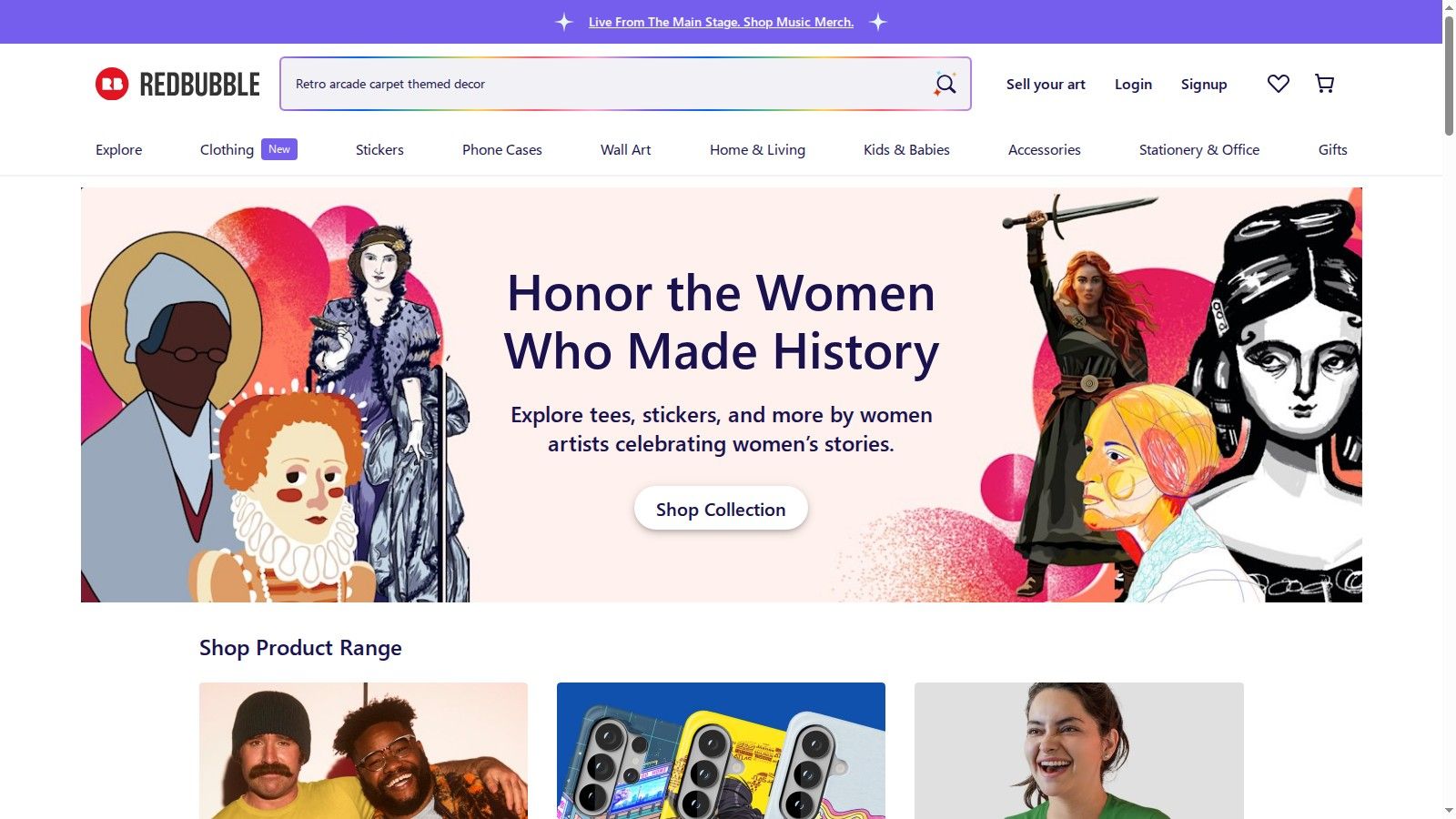
Unlike selling digital files, Redbubble handles the entire physical side of the business. You upload your design once, choose which products to enable, and the platform manages manufacturing, worldwide shipping, and all customer service. This approach to passive income for designers means your main job is to create compelling art and optimize your listings.
How It Works for Sellers
Getting started on Redbubble is straightforward. You create an account, upload your high-resolution artwork, and write titles, descriptions, and tags. The platform then automatically generates mockups showing your design on dozens of different products. You have control over which products are available for sale with each design.
Your earnings come from an "artist margin," which is a percentage markup you set on top of Redbubble's base price for each product. For example, if a t-shirt has a base price of $20 and you set a 20% margin, the retail price will be $24, and you earn $4. You can adjust this margin for each product type. The platform recently introduced account tiers (Standard, Premium, Pro) which can include account fees and different payment thresholds, so it's important to understand how your tier impacts potential earnings.
Key Insight: Redbubble's strength lies in its complete fulfillment model. It's a "set it and forget it" system where your primary responsibility ends after the upload, making it one of the most hands-off passive income streams available.
Maximizing Your Earnings
Success on Redbubble hinges on visibility and relevance. Researching popular niches and trending topics can give you a significant edge. Pay close attention to your tagging strategy; use a mix of broad and specific keywords to help buyers discover your work through the marketplace search.
Creating designs that work well across a wide array of products is another key to success. A design that looks great on a sticker might need adjustments to work on a duvet cover. Also, be aware that Redbubble frequently runs site-wide sales. Your margin is calculated from the base price, so discounts can affect your final earnings per sale. Focusing on creating a large, diverse portfolio of high-quality, well-tagged designs is the most reliable path to generating consistent income.
Website: https://www.redbubble.com
Summary:
| Feature | Details |
|---|---|
| Monetization | Earn an artist margin on sales of physical products featuring your designs. |
| Commission | You set your own margin (markup) above the product base price. |
| Access | Open to all creators; account tiers may have fees and varying payout rules. |
| Best For | Illustrators and graphic artists wanting a hands-off way to sell on a wide range of merchandise. |
Top 7 Passive Income Platforms for Designers
| Platform | 🔄 Implementation complexity | ⚡ Resource requirements | 📊 Expected outcomes | 💡 Ideal use cases | ⭐ Key advantages |
|---|---|---|---|---|---|
| Creative Market | Moderate — curated shop application and setup | High-quality design assets; ongoing catalog refinement | Steady sales to design-savvy buyers; sellers keep ~50% list price | Fonts, UI kits, illustration packs, premium templates | Design-first audience, shop analytics, affiliate upside |
| Envato (Market + Elements / Placeit) | Moderate–High — multiple programs and rules to navigate | Large, varied asset library; keywording and exclusivity choices | Mixed: one-off sales + pool-based recurring revenue; scales with volume | Web/motion templates, themes, stock assets for diverse niches | Massive buyer base and multiple revenue models |
| Gumroad | Low — simple no-code storefront and hosting | Product files, checkout setup, and marketing to audience | Direct revenue with predictable fees (10% + $0.50); quick launch | Solo creators selling guides, courses, templates, memberships | Fast to launch, Merchant-of-Record handles taxes and payouts |
| Etsy | Low–Moderate — listing creation and SEO required | Product creation, thumbnails, ongoing SEO/testing | Passive fulfillment with large exposure; fees can erode margins | Consumer printables, planners, SVGs, brand kits | Huge marketplace reach and instant digital delivery |
| Canva Creators | Moderate — selective acceptance and template optimization | Templates tailored for Canva workflows; periodic updates | Passive per-use royalties from Pro exports; income varies by pool | Social posts, presentations, document templates with repeat use | Massive built-in audience and passive royalty distribution |
| Adobe Stock | Moderate — submission standards and disciplined keywording | High-quality assets, consistent uploads, strong metadata | Clear royalties (~33% non-video); income depends on portfolio size | Photos, vectors, illustrations, templates for professional buyers | Trusted Adobe integration and transparent royalty rates |
| Redbubble | Low — upload designs and set artist margin | Design files and mockups; no fulfillment effort | On-demand product sales; margins affected by base prices and discounts | Apparel, home decor, prints, merch for consumer markets | Fully handled production/shipping/customer service; broad catalog |
Your Next Step: From Plan to Passive Profit
You've just explored a full spectrum of platforms, from the curated halls of Creative Market to the expansive ecosystems of Envato and the direct-to-creator model of Gumroad. We've dissected the nuances of selling templates, stock assets, and print-on-demand goods across Etsy, Canva, Adobe Stock, and Redbubble. The path to generating passive income for designers is now clearly mapped out, but knowing the path is different from walking it. The most significant barrier isn't a lack of opportunity; it's the paralysis that comes from having too many options.
The central takeaway from this guide is simple: start small, but start now. Your first step isn't to build an empire across all seven platforms. It's to choose one. One platform that resonates with your current skills, your design style, and the assets you either already have or are excited to create.
Choosing Your Starting Line
How do you pick just one? Let’s make it practical. Review the platforms we covered and ask yourself these pointed questions:
- What assets can I create most efficiently? If you constantly build custom logos and icon sets for clients, Adobe Stock or Envato Elements could be your quickest entry point. If you design complex, multi-page layout documents, Gumroad or Creative Market might be a better fit for selling premium templates.
- Who do I want my customer to be? Selling Canva templates targets a massive audience of non-designers and small business owners. Listing on Creative Market, however, connects you with other designers and marketing professionals who value high-quality, specialized tools. Your target customer dictates both the product and the platform.
- What is my tolerance for marketing? Platforms like Gumroad give you total control and a higher profit margin, but you are responsible for driving 100% of your traffic. Conversely, marketplaces like Etsy and Redbubble have built-in audiences, but you face more direct competition and lower margins. Be honest about how much time you want to spend on promotion versus creation.
For a deeper dive into how these design-focused streams fit into the bigger picture, you can find more inspiration in this detailed guide to the best passive income ideas for 2026. As you plan your journey from design services to passive profit, consider exploring a broader range of options outlined in this guide, which can help you diversify your income streams in the future.
From One Product to a Sustainable System
Once you've chosen your platform, commit to creating and listing your first product. Don't aim for perfection; aim for completion. That first sale, no matter how small, is a powerful motivator. It's tangible proof that you can create something once that pays you repeatedly.
Key Insight: Your initial goal should be to build a small, high-quality catalog of 5-10 items on a single platform. This creates a "sticky" shop that encourages repeat customers and demonstrates your expertise, making you more visible within the platform's algorithm.
This focused approach allows you to master one system at a time. You'll learn the specifics of one platform's tagging system, one audience's preferences, and one upload process. Trying to learn seven at once is a recipe for burnout. After you have a stable, income-generating base on your chosen platform, you can begin to diversify. The assets you created for Creative Market might be adapted for Gumroad, or your best-selling Etsy designs could find a new life on Redbubble.
The journey to building a meaningful stream of passive income for designers is a marathon, not a sprint. It’s built one asset at a time. Every template you design, every icon you export, and every pattern you upload is a digital employee working for you around the clock. The work you do today is an investment in your freedom tomorrow. Stop planning and start building. Your future self will thank you.
Ready to accelerate your passive income journey with the best tools and insider strategies? Join Creators Toolbox to get weekly, curated resources that help designers like you build profitable digital product businesses. Find the right software, learn new skills, and stay ahead of the curve with Creators Toolbox.