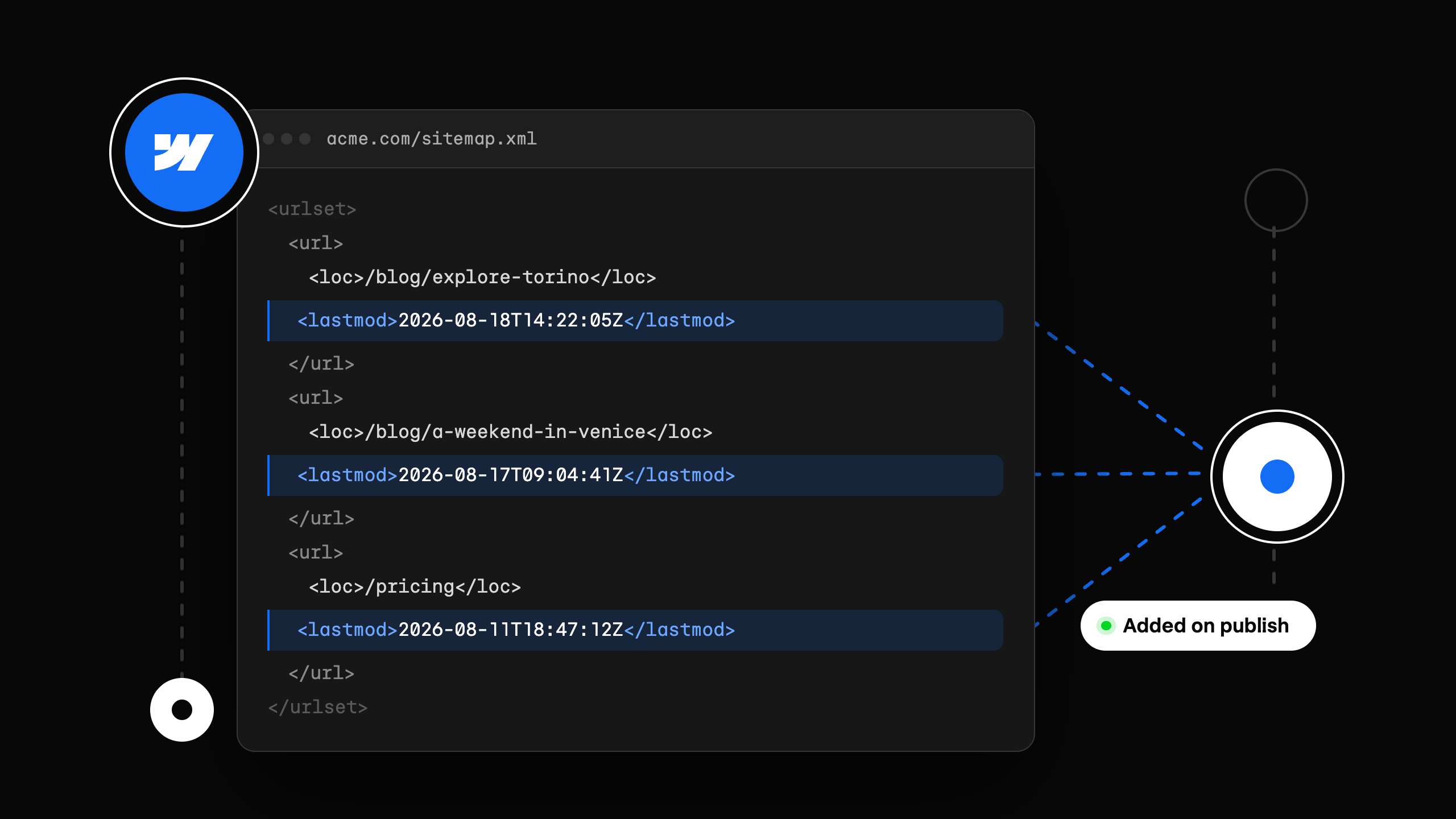
Webflow sitemaps now show search engines when pages last changed
By Steven Van ·
The per-page lastmod timestamp can prompt faster Google re-crawls and feeds AI answer engines like Overviews and Perplexity.
Webflow's automatic sitemap now includes a lastmod timestamp on every page, so search engines know exactly when a page last changed instead of guessing on their own crawl schedule. Publish an updated blog post or a pricing page and Webflow can prompt Google to re-crawl that URL right away rather than waiting in the queue.
The timestamp also feeds AI answer engines like Google AI Overviews, Perplexity, and ChatGPT search, which use lastmod to judge which pages are current when deciding what to cite. Because it's tracked per page rather than per site publish, crawlers can focus on what actually changed, which matters more for larger sites or CMS collections that update often.
Two related changes ship alongside it, announced August 20, 2026:
- Sitemaps can now use your canonical URL as the domain, useful for sites running behind a reverse proxy.
- Sitemaps update on a single-page publish, rather than requiring a full-site publish.