How Sensay went from zero to product in six weeks
By Steven Van ·
Sensay's CTO says preview deployments, feature flags, and instant rollbacks let it launch its MVP at Web Summit with no DevOps team.
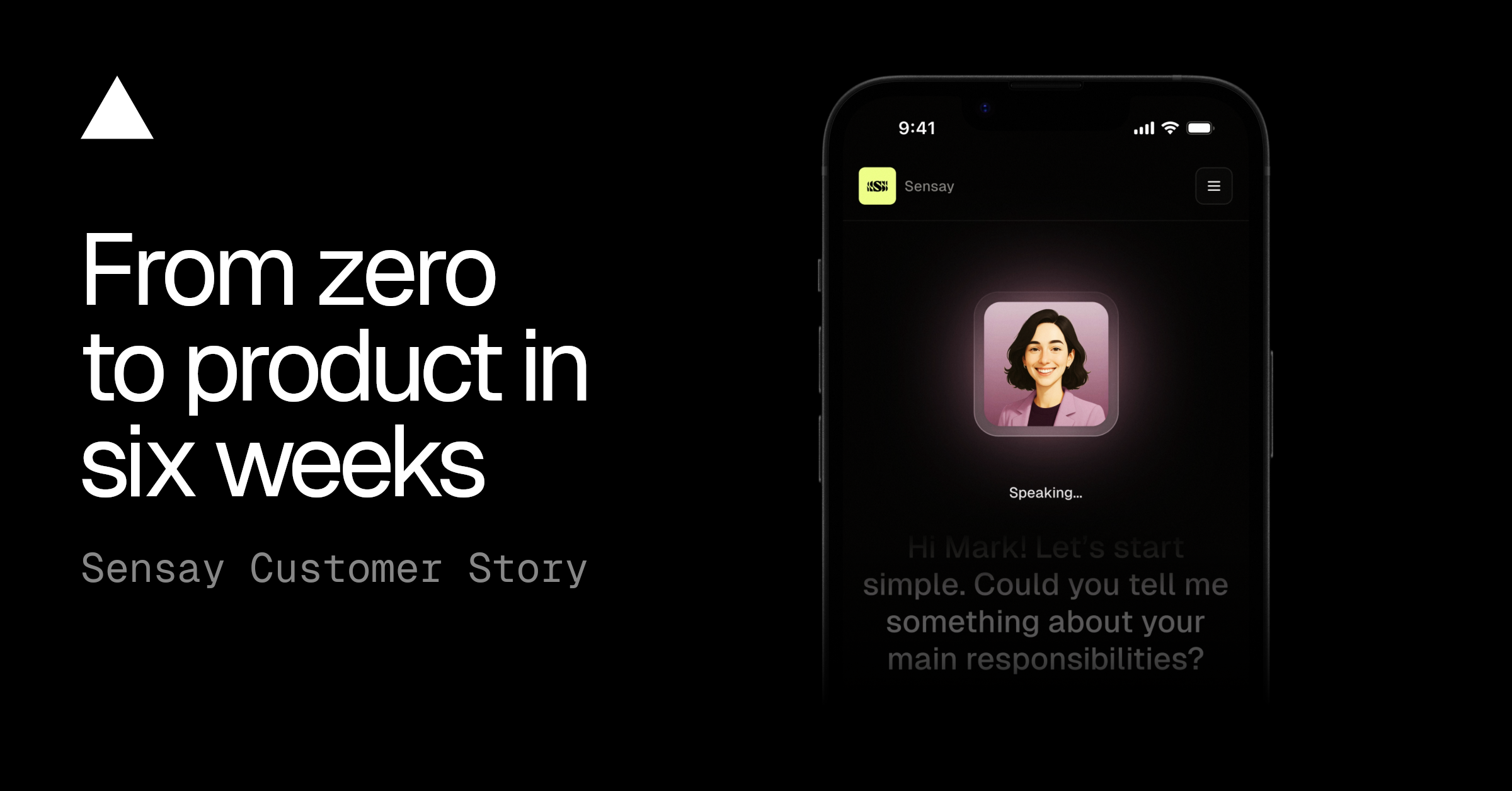
Sensay, an AI startup, built and launched its employee off-boarding platform at Web Summit in six weeks using Vercel, without hiring a DevOps team. In a case study published by Vercel, co-founder and CTO Marco Bettiolo says the speed came from leaning on preview deployments, feature flags, and instant rollbacks instead of building deployment infrastructure in-house, something he had done at two previous companies at a cost of millions of dollars.
- Preview deployments gave every branch a working URL that could be tested and shared without merging, so the team could test changes in isolation on a pull request.
- Feature flags, toggled through the Vercel Toolbar, let developers hide unfinished work and keep everyone on one mainline codebase instead of maintaining long-lived branches.
- Instant rollbacks lowered the risk of deploying, and built-in domain configuration, environment variables, firewall, bot protection, and usage dashboards meant Sensay didn't need separate services for any of them.
Sensay runs a hybrid architecture: serverless frontend and backend workloads on Vercel, with Next.js on the frontend, a separate API project built with Hono, and the Vercel AI SDK for its AI features, alongside stateful workloads hosted elsewhere.