Figma Weave adds Black Forest Labs' first video model
By Steven Van ·
FLUX 3 brings 20-second clips with native, lip-synced audio to Weave's canvas, with keyframe support coming soon.
Figma Weave just added FLUX 3 to its model lineup, and it is a notable get: FLUX 3 Video is Black Forest Labs' first video model, released only a day earlier. Inside Weave's node-based canvas you can now generate clips up to 20 seconds long with native audio, continue existing footage with FLUX 3 Extend Video, and, per the Weave team, keyframe support is coming soon. The launch demo, fittingly for a model from the maker of FLUX, features doves.
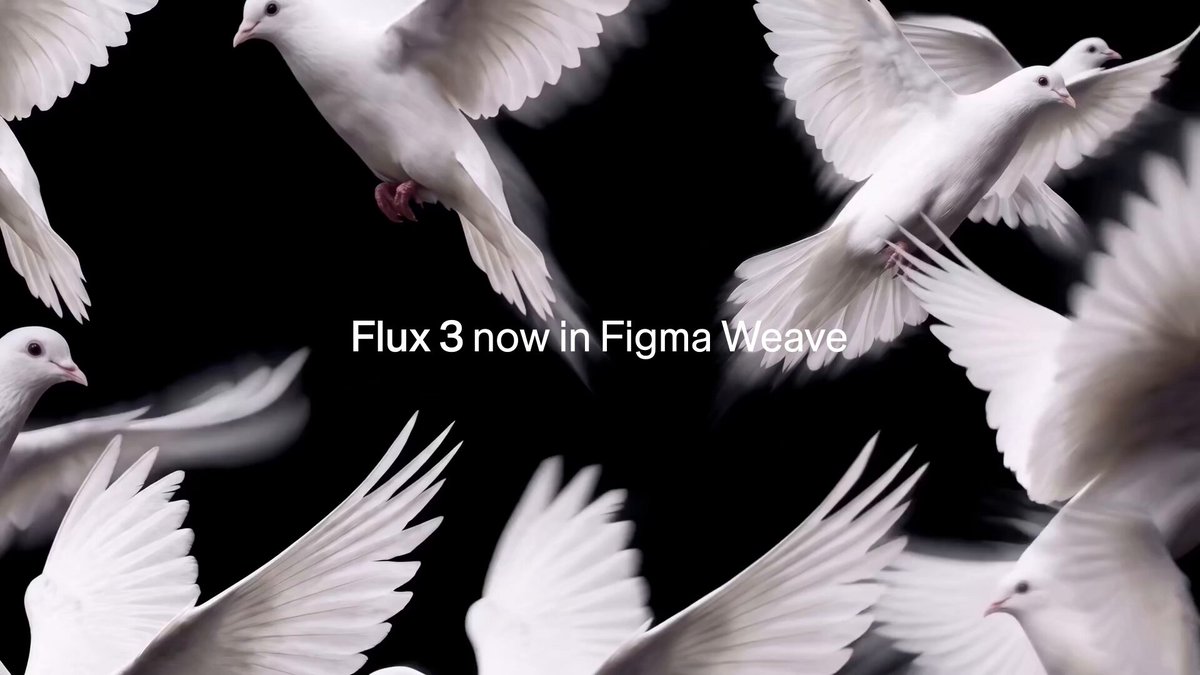
Black Forest Labs' first video model lands on the canvas
Black Forest Labs built its reputation on the FLUX image models, and FLUX 3 is its first move into video. Released on August 4 via the BFL API and select partners, it is a multimodal model built on the company's Self-Flow architecture, generating video and audio together from one set of weights. Figma Weave is among the first creative platforms to put it on a canvas, alongside the models it already hosts from Google, Kling, Runway, Luma, and others. That is the core appeal of Weave, which began life as the Israeli startup Weavy before Figma acquired it in late 2025: you pick the right model for each node in a workflow instead of committing to one vendor.
Sound is generated in the same pass as the pixels
The headline feature is native audio. FLUX 3 does not bolt a soundtrack onto a silent clip afterward; dialogue, sound effects, and ambient noise are rendered alongside the frames, so a sound lands on the exact frame of the event that causes it. Black Forest Labs says the model handles lip-synced dialogue in more than 13 languages, and clips render in HD 720p or Full HD 1080p. For creators, 20 seconds with synchronized sound is enough for a complete beat: a product moment, a punchline, a scene transition, without stitching a separate audio pass in another tool.
Extend Video turns clips into sequences
The second piece Weave shipped is FLUX 3 Extend Video, the model's continuation mode. You feed it up to four seconds of existing footage plus its audio and describe what happens next, and it carries motion, camera work, dialogue, and sound forward without a visible seam. On Weave's canvas this is a natural fit: chain an Extend node onto a generation node, keep chaining, and you are building multi-shot sequences with consistent characters rather than isolated clips. Keyframe support, which lets you pin start frames, end frames, or multiple waypoints for the model to connect, is on the way per the announcement.
How FLUX 3 stacks up against the field
In Black Forest Labs' own preference tests on 10-second generations, FLUX 3 was preferred over Luma Ray 3.2 in 93 percent of comparisons and over Runway Gen-4.5 in 77 percent, while landing roughly even with Seedance and Gemini Omni Flash. Those are internal numbers and independent benchmarks do not exist yet, but they suggest the model belongs in the top tier. The practical takeaway for Weave users is simpler: you do not have to guess. Run the same prompt through FLUX 3, Kling, and Ray side by side on the same canvas and let the outputs settle the question for your specific shot.
Sources: @figmaweave announcement on X, Black Forest Labs: FLUX 3 Video, The Decoder